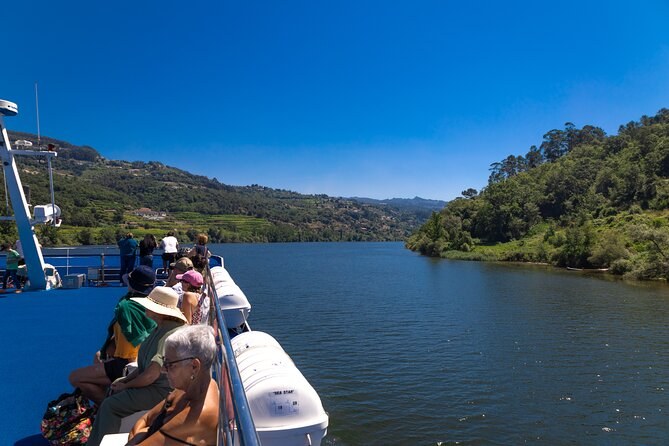
Douro Valley and Régua Panoramic Cruise with Lunch from Porto
Six hours on the river, through the Carrapatelo lock and its 35-metre lift.
From $91 per person
The Douro was demarcated on 10 September 1756, by the Marquês de Pombal, using 335 granite boundary posts. Bordeaux was not classified until 1855 and the French appellation system did not arrive until the 1930s. The Douro beat both by roughly two centuries.
The Douro Demarcated Region covers about 250,000 hectares. Only 43,808 of them are under vine — 18%. The rest is schist, scrub, olive, almond, town and river. The image of an unbroken sea of vines is a photographer's crop.
The Alto Douro Wine Region inscribed by UNESCO in 2001 is about 24,600 hectares — the terraces themselves. The legal wine region is ten times that. Both figures are correct and most sources quote one without saying which.
There are roughly 20,000 of them. Two hectares is about three football pitches, on a slope, in schist. Which explains the cooperatives: no single smallholder could make and sell wine at that scale alone.
| Sub-region | Total | Under vine | Share planted |
|---|---|---|---|
| Baixo Corgo | 45,000 ha | 13,204 ha | 29% |
| Cima Corgo | 95,000 ha | 20,427 ha | 22% |
| Douro Superior | 110,000 ha | 10,177 ha | 9% |
The largest sub-region is the least planted, and no day trip from Porto reaches it.
Rapids and rock bars made the Douro dangerous for the boats carrying Port downriver. Five dams built between 1971 and 1986 — Carrapatelo, Régua, Valeira, Pocinho and Crestuma — turned it into a 210 km staircase from the sea to Barca d'Alva.
Barragem do Carrapatelo lifts boats 35 metres in one chamber, the deepest navigation lock in Europe. Going up takes about twenty minutes with the concrete walls sliding past the deck. Plenty of sources say 45 metres; the waterway authority publishes 35.
Flat-bottomed, single square sail, steered by a long sweep oar from a raised platform, because the unregulated river was full of rapids. They carried pipes of Port down to the lodges at Vila Nova de Gaia. The dams ended the rapids and the trade in the same decade.
Roughly 3,047 tiles, made by J. Oliveira at Fábrica Aleluia, covering nearly all the walls of the main building. They show the stages of Port production, including practices that have since disappeared from the valley. They are free and outdoors.
The N222 between Peso da Régua and Pinhão — 27 km, 93 curves — was rated the world's best driving road by a study commissioned by Avis in 2015, scoring roads on the ratio of curves to straights. Big Sur came second. The road deserves it; the ranking is an advert.
The Museu do Douro occupies the Casa da Companhia in Peso da Régua — the house of the Companhia Geral da Agricultura e das Vinhas do Alto Douro, the body that carried out the 1756 demarcation. Admission is €8, and Douro residents get in free on Saturdays.
The difference is a decision in the cellar. Port is fortified part-way through fermentation with grape spirit, which kills the yeast and leaves sugar and strength. Douro DOC is left to ferment dry. Same hillside, same grapes, two completely different wines.
The nearest station with published normals records about 15 mm of rain in July and 115 mm in October, with December wetter still at 175 mm. The dry summer is what concentrates the fruit; the wet winter is what fills the river.
Quintas track sugar levels daily through late August, and the call to start picking comes when the numbers say so rather than when the calendar does. Picking is by hand because no machine can work a terrace. It runs from early September into the first week of October — the detail is on the weather page.
Most of them, as it turns out, and that is the useful part. You will stand on the terraces of fact 2 and see how little of the hillside is vine. You will taste both halves of fact 12 at the same table. If you take the six-hour sailing you will ride through fact 7 with the walls going past the deck, and if you get an hour at Pinhão you can walk to fact 9 and back in fifteen minutes.
What you cannot see in a day is the Douro Superior of fact 5, and you will only catch fact 14 if your visit falls between the second week of September and the first week of October. Those two are the argument for a second trip.
You will find the locks on the six-hour river sailing, and the tiles a two-minute walk from the Pinhão quay. The sub-regions are explained on the map page, and the estates behind facts 4 and 12 are on the wine estates page. Everything else you can see from a car window on the N222, if you have somebody else driving.
If any of it has changed your mind about how you spend the day, every departure is compared at Douro Valley Tours — and you can check which month you want before you fix a date.
See the facts on the ground — the lock, the rabelo and the terraces, in a day.
Six hours on the river, through the Carrapatelo lock and its 35-metre lift.
From $91 per person
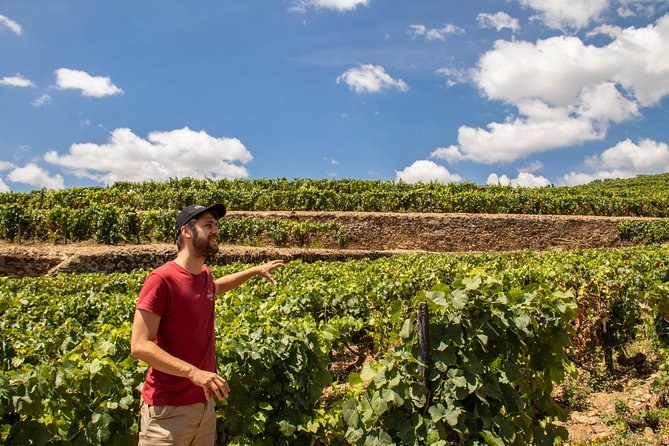
Two estates and a rabelo, the boat the Port actually travelled down on.
From $117 per person
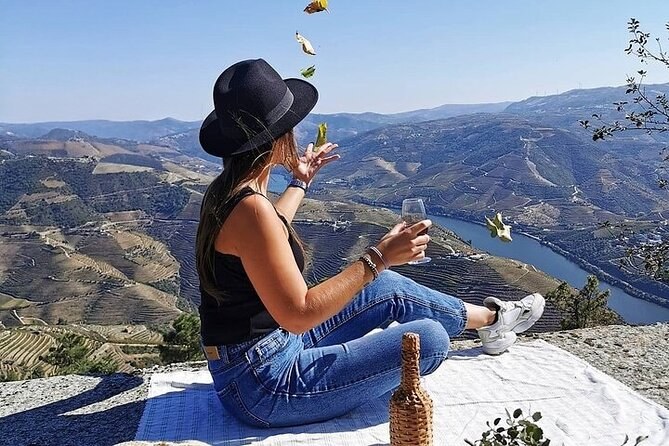
Amarante, the Galafura viewpoint and the N222, for the landscape rather than the cellar.
From $105 per person