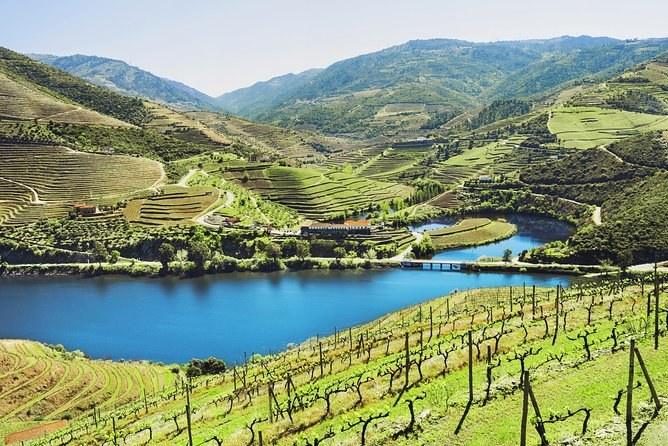
Douro Valley Small Group Tour: 2 Wineries, Lunch & River Cruise
Two carefully chosen estates with tastings across Port and DOC, plus the rabelo.
From $124 per person
The Douro has no cathedral and no great monument. What it has is around 20,000 growers farming an average of two hectares each across 43,808 hectares of vine, and the buildings that matter are the working estates those growers deliver to. A quinta is the vineyard, the winery, usually a house, and often a name on a Port label you already recognise.
Only a few dozen receive visitors, which is why the same names appear across otherwise different itineraries. Which two you get does more to shape your afternoon than the price you paid.
In the Távora valley, a tributary running south off the Douro near Pinhão. Panascal is unusual in running a self-guided vineyard walk, so instead of being led through a cellar you walk the terraces themselves with the slope under you. It is the estate named by more than one operator in this set, which suggests it handles groups well.
What it shows you that the others do not: the gradient. Reading that the terraces are steep and standing on one are different experiences.
At the confluence of the River Tedo and the Douro, organic, and small. The tasting happens where the wine is made rather than in a room built for tastings, which changes the tone of the visit. It appears on one of the highest-volume itineraries in this set as the first stop of the day.
Just downstream of Pinhão, and the largest of the estates the day tours use. It is on the four-winery itinerary, where it functions as the polished stop among smaller ones. If you want the version of a Port estate that has been showing people round for a century, this is it.
Intimate, and on one operator's listing the owner often leads both the tour and the tasting personally. That is the whole appeal. It is the second stop on a widely booked departure, which means it is usually the one people remember from the afternoon rather than the morning.
The smaller stops that turn up on the multi-estate days. Neither is a visitor operation in the way Roeda is; a visit is closer to being shown round somebody's farm. They appear on the three- and four-winery itineraries, which are the ones for people who came to taste rather than to sightsee.
Pinhão quay, where the boats leave. Before you board, walk two minutes to the railway station: 24 azulejo panels from 1937, roughly 3,047 tiles, made by J. Oliveira for Fábrica Aleluia, showing the harvest, the treading and the barrels going downriver by rabelo. It is the best free thing in the valley and plenty of itineraries do not build it in.
| Wines poured | Typical shape | Found on |
|---|---|---|
| 3 | One estate, a short flight | Landscape-led days |
| 4 DOC + 4 Port | Two estates, structured contrast | The eight-seat premium day |
| 6 | Two estates, mixed | The most common shape |
| 9–10 | Two or more estates, Vintage Port opened at the table | Premium and multi-region days |
Almost always the Cima Corgo, the middle third of the demarcated region: 95,000 hectares with 20,427 under vine, centred on Pinhão. Every estate above is here. The Baixo Corgo is what you drive through on the way, and the Douro Superior is the third nobody reaches on a day trip. The map page lays out all three.
| Estate | Scale | What the visit is like | Best if you want |
|---|---|---|---|
| Quinta do Panascal | Medium | Self-guided vineyard walk | To feel the gradient rather than be told about it |
| Quinta do Tedo | Small, organic | Tasting where the wine is made | The winemaking, close up |
| Quinta da Roeda | Large | A practised, polished tour | The classic Port-house experience |
| Quinta do Beijo | Small | Often led by the owner | To talk to somebody who farms it |
| Quinta do Lodeiro | Small | Informal, farm-scale | Somewhere off the standard circuit |
| Casa dos Barros | Small | Informal, with lunch on some days | Food alongside the wine |
No itinerary visits more than four of them, and most visit two. Which two is usually decided by the operator's own relationships and by availability on the day, which is why several listings name a likely estate rather than a fixed one.
Two is the standard, and it is the right number for a first visit: enough contrast to learn something, not so much that the wines blur. Three adds a genuine third character without lengthening the day much, because the estates are close together. Four is a tasting schedule rather than a sightseeing day — ten wines and five olive oils across one afternoon — and it leaves no room for the boat, which those itineraries drop.
If you are choosing on this axis alone, work backwards from whether you want the river. A Douro Valley wine tasting tour with four estates and a cruise does not exist in this set, and that is not an oversight: there are not enough hours in the day for both.
Look at the terraces immediately behind whichever estate you are standing in. Narrow walled steps holding two or three rows of vine are pre-phylloxera, cut by hand in the eighteenth and nineteenth centuries. Wider terraces with sloping earth banks are post-1970s, built for tractors. Vertical rows running straight up the slope are more recent still. Three centuries of engineering sit in one view, and nobody points it out.
Most visitor-facing estates take direct bookings, usually €15–25 for a tour and tasting, and some do lunch. The obstacle is transport: they sit up single-track roads 10–20 minutes apart, and somebody has to stay dry. That, rather than the price, is what puts most people on a guided day. The alternatives are set out on getting there, and the practical side on planning a visit. Every guided departure that reaches these estates is compared at Douro Valley Tours.
Pick the departure that visits the estates you want, not the ones nearest the road.
Two carefully chosen estates with tastings across Port and DOC, plus the rabelo.
From $124 per person
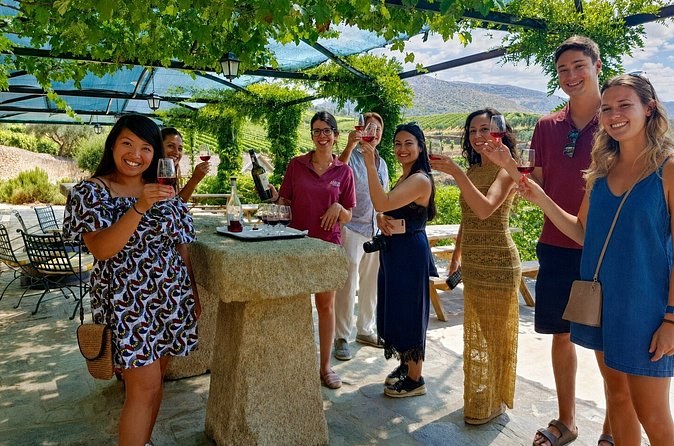
Four estates, ten wines and five olive oils — the densest tasting schedule here.
From $200 per person
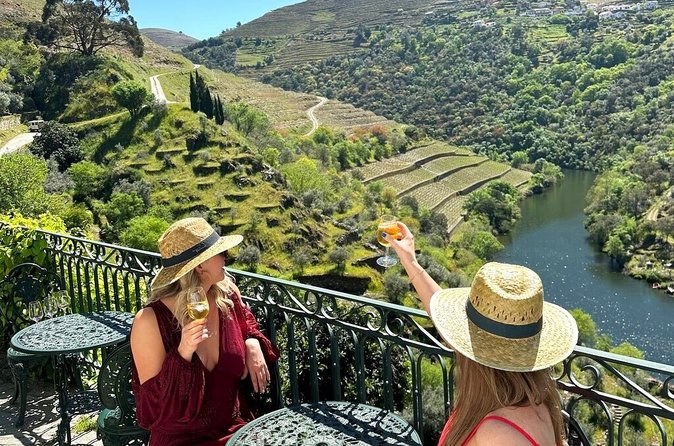
Three estates and lunch at a wine property, for people who came to taste.
From $130 per person