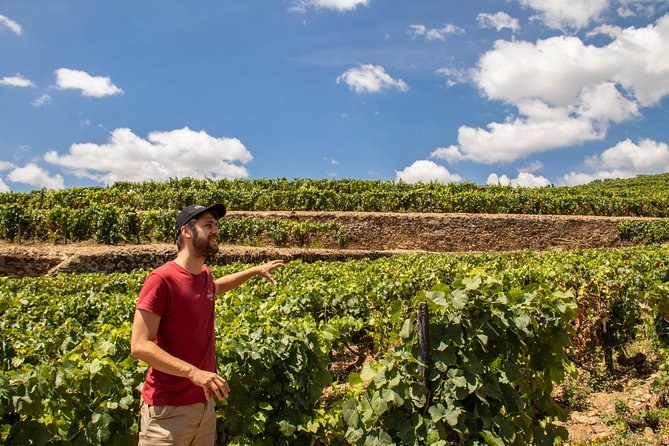
Complete Douro Valley Wine Tour with Lunch, Wine Tastings and River Cruise
The version this shape was written from: two estates, lunch and a rabelo.
From $117 per person
A Douro Valley day tour is nine or ten hours and it has a shape almost every operator follows. Knowing the shape in advance is the difference between a day that feels generous and one that feels like a bus tour with stops.
Between 7.30 and 8.30 in the morning, and which end of that you get depends on the grade you booked rather than the tour you booked. Hotel pickups run first, working a route across central Porto; meeting-point departures gather at a named square or theatre at a fixed time and leave promptly.
The earliest departures are 7.30am, and on those the coach does not wait. Operators send pickup details the evening before and ask you to be outside ten minutes early, which is advice worth following in winter when it is dark and wet.
The A4 east out of Porto is unremarkable for the first half hour. Then the road climbs into the Serra do Marão and goes through a tunnel, and on the far side the landscape changes completely: dry, terraced and steep. Most guides use this stretch to set the day up — what a quinta is, what the terraces are, why the region was demarcated in 1756 — and the tastings later assume you were listening.
Some departures break at Amarante, on the Tâmega, for coffee and thirty minutes. It has an arched stone bridge and a monastery church and it is a pleasant stop rather than a destination.
Around two hours in, as the road drops towards Peso da Régua. The first proper view is usually engineered: most itineraries stop at a miradouro rather than letting you catch it through a window. São Leonardo de Galafura is the big one, high above the river with terraces on both banks; São Cristovão do Douro is tighter and closer to the water.
Ten to thirty minutes, depending on the departure. This is the photograph you will keep.
Guided, and usually the more educational of the two. You will walk some vines, see the lagares or the tanks, hear how fortification works, and taste between three and five wines. The good operators pour a dry Douro red alongside the Ports so the contrast is explicit rather than assumed.
Allow an hour to an hour and a half. If you want a bottle, buy it here rather than at the airport; the estates that sell direct are cheaper and several travellers mention it specifically.
Around one o'clock, usually at a wine estate rather than a restaurant in town, and usually three courses with Douro wines poured alongside. It sits between the two estate visits deliberately: tasting six wines before one in the afternoon on an empty stomach is how people remember less of the day than they meant to.
Vegetarian and gluten-free options exist on nearly every departure with advance notice. That means at booking, not on the day.
Early afternoon, from the quay at Pinhão, and this is the part people most often misunderstand. The cruise is inside the valley, not from Porto. It runs fifty minutes to an hour on the stretch below the town where the terraces come closest to the water.
After a morning of looking down on the valley from viewpoints, seeing it from below changes the scale of the place. If you have an hour at Pinhão rather than fifty minutes, walk two minutes to the railway station and look at the 24 tiled panels from 1937 before you board.
Mid-afternoon, and usually smaller and less formal than the first. On several itineraries this is where the owner leads the tasting personally. The wines are often the better ones — operators tend to build towards the vintage Port rather than opening with it.
Expect another hour, another three to five wines, and olive oil or local produce on the table alongside.
Leaving the valley between four and six, which is when the light is at its best on the terraces. Departures that route back along the N222 give you 27 km of it with the river below. Stay awake for that stretch; you can sleep on the motorway afterwards.
Drop-off is early evening, between six and seven-thirty. Some tours return to your hotel, some to two or three central points. Plan nothing for the evening.
| Value full day | Eight-seat premium | River day | |
|---|---|---|---|
| Out of Porto | 7.30–8.30am | about 8am | morning coach |
| First stop | Viewpoint, then a cooperative | Peso da Régua, then an estate | Peso da Régua quay |
| Midday | Lunch in a cellar | Viewpoint, then the boat | Boarding, lunch aboard |
| Afternoon | Boat, then a second cellar | Three-course lunch, second estate | Six hours downstream through two locks |
| Home by | early evening | early evening, central drop-off | evening, Porto quay |
Worth knowing if you are trying to meet somebody, or if you have a train to catch at the end of it. By nine you are on the motorway. By ten you are through the Marão. By eleven you are at a viewpoint or a first estate. By one you are eating. By three you are on the water. By half past four you are at a second estate, and by six you are somewhere on the road home.
That shape holds across almost every departure here regardless of fare, because it is dictated by the driving time at each end and by when the estates and the boat operate. What the premium fares change is how long each transition takes, not when it happens.
Estate visits and restaurants are third-party bookings, and operators say plainly that schedules can shift and other groups may be present. What does not move is the driving time and the boat departure at Pinhão, because both are fixed by geography and a timetable.
Build slack into your evening rather than your morning. Returns run late more often than departures run early.
Three departures sell a half-day option, and what they cut is not half the day. The driving stays — three hours of it, because Peso da Régua does not move closer for a lower fare. What goes is one estate and, on two of the three, the lunch.
So a six-to-seven-hour half day is roughly three hours on the road, one estate, one boat and a viewpoint. That is a reasonable trip if a ten-hour day is genuinely more than you want, and a poor deal if you were expecting proportionally more time in the valley.
It follows the same skeleton and changes the timing. Nobody waits for a group of twenty-seven to reassemble at each stop, which typically buys back forty minutes across the day, and the guide will reorder things if you ask: an extra viewpoint instead of the second estate, a longer lunch, an earlier finish.
One private departure will also collect you from an address inside the Douro Valley itself rather than only in Porto, which is the only listing here that will. If you are staying in the valley overnight, or arriving by train, that changes what is possible.
The day runs. Cellars and tasting rooms are indoors, lunch is indoors, and the boats have covered seating — one operator answers the question directly on its own listing by pointing out that its activities all take place in covered or protected areas. What suffers is the viewpoints, which are the part of the day that depends on visibility.
October averages around 115 mm of rain and December about 175 mm. Neither cancels a tour. If the forecast is bad and the terraces are why you are going, the free cancellation window up to 24 hours before is there to be used.
More often than people expect. A first visit is spent understanding the place: what a terrace is, why the wine is fortified, where the river goes. A second is spent choosing — a different sub-region, estates you picked yourself, or the same estates in a different season, which changes them more than you would think.
The bare terraces of February and the working cellars of September are not the same landscape and not the same visit. If you liked it once, the cheapest way to see something new is to come back at the other end of the year rather than to go somewhere else.
If a ten-hour day is more than you want, the half-day options run six to seven and keep the estate and the boat. The trade-offs are set out on planning a visit, and every departure is compared at Douro Valley Tours.
Between 7.30 and 8.30 in the morning, and which end depends on the grade rather than the tour. Pickups run first; meeting-point departures leave promptly.
About three hours of nine or ten, split between the run out and the run back. No fare buys a shorter drive.
Around one o'clock, usually at a wine estate rather than in a town, and usually between the two estate visits. That order is deliberate.
Pinhão, inside the valley. Not Porto. It runs fifty minutes to an hour on the stretch below the town.
Between six and seven-thirty in the evening. Plan nothing afterwards.
Yes. Estate visits and restaurants are third-party bookings and operators say schedules can shift. The driving time and the boat departure do not move.
The version this shape was written from: two estates, lunch and a rabelo.
From $117 per person
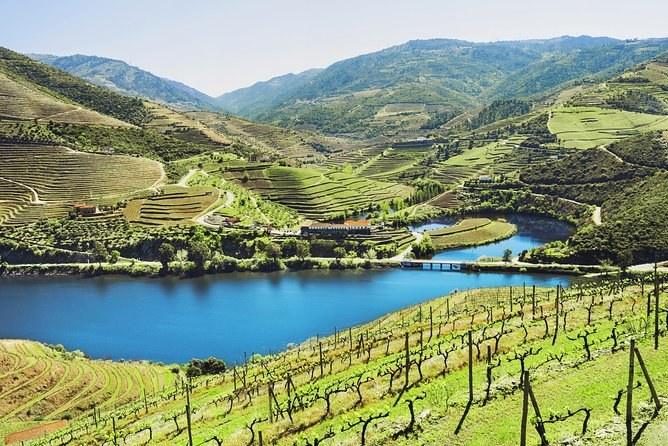
Two wineries, a coffee stop at Amarante and a 50-minute rabelo from Pinhão.
From $124 per person
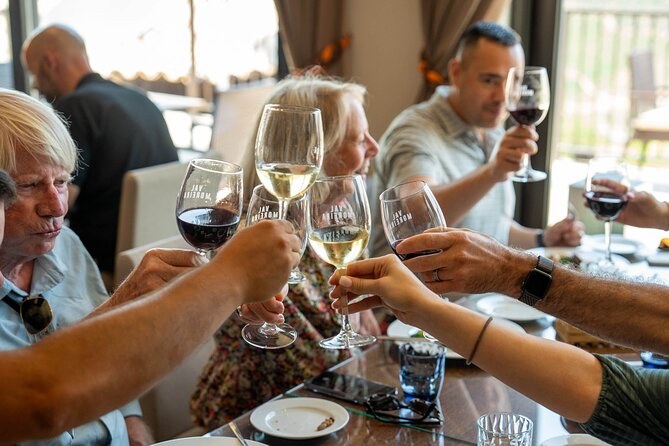
Eight seats, an English-only guide and a 45-minute cruise at Pinhão.
From $147 per person