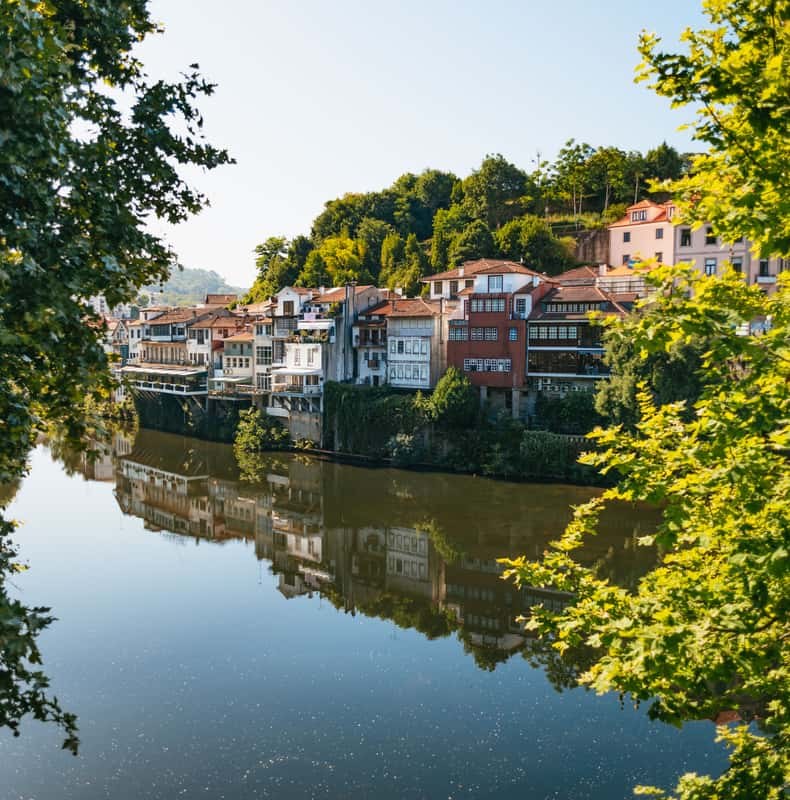
Porto: Douro Valley with Lunch (Optional), Tastings & Cruise
The cheapest way in, with a half-day option if ten hours is more than you want.
From $62 per person
You do not have to book a tour to see the Douro. The train is one of the best rail journeys in Europe, the N222 is one of the best roads, and both are cheaper than a guided day. Here is what each one gives you, and the one thing none of them solves.
Yes, easily, and plenty of people do. The valley is public land with public roads, there is no gate and no admission, and Peso da Régua and Pinhão are ordinary towns with stations, restaurants and riverfronts. Getting there independently is straightforward.
What is not straightforward is getting into a quinta. The estates are private property up single-track hillside roads, they take bookings rather than walk-ups, and they are ten to twenty minutes apart. That is the problem every independent visit has to solve.
The Linha do Douro leaves Porto São Bento and reaches Peso da Régua in about two hours, Pinhão in about two and a half and the Pocinho terminus in about three and twenty. For the last hour it runs at the water's edge, close enough that the windows fill with river.
It costs around €30 return. Direct services are limited — check current times with CP before you travel, and check the last train back before the first one out, because that is the constraint that ruins independent days.
A good deal, as long as you plan it around the towns rather than the hillsides. Peso da Régua gives you the Museu do Douro at €8, the quay and the pedestrian bridge. Pinhão gives you the tiled station, the quay and a one-hour boat trip you can buy on the day. Both towns have restaurants within five minutes of the platform.
A few quintas are within walking distance of Pinhão, and some take same-day bookings by phone. Most do not. If a quinta visit is the point of your trip, the train alone will disappoint you.
A small car costs €60–90 for the day plus about €35 in fuel and tolls. It gets you to any estate you have booked, lets you stop where you like, and puts you on the N222 — 27 km, 93 curves, the river below, and rated the best driving road in the world by a 2015 study commissioned by the car-rental firm Avis.
The constraint is the drink limit. Portugal's is 0.5 g/l, and a tasting flight of six wines will put most people over it. Somebody has to genuinely not drink, not sip and spit. If nobody in your party will, this option is closed however much you like driving.
Not really, and it is worth saying so. Regional coaches connect Porto with Régua and Lamego, but the timetables are built for residents rather than day trippers, the journeys are slower than the train, and none of them goes near a quinta. The train does everything the bus does, faster and more scenically, for a similar fare.
There is a six-hour panoramic sailing between Peso da Régua and Porto, usually sold with a coach transfer one way and lunch aboard. It passes through the Carrapatelo lock, which lifts boats 35 metres and is the deepest in Europe.
It is a genuinely different day and a good one, but it is not a wine day: there is no winery and no tasting on it. Treat it as a landscape trip. The detail sits on the river cruise page.
Most visitor-facing estates take bookings through their own websites, usually €15–25 for a tour and tasting, and some offer lunch for more. Book at least a few days ahead in summer and further in September. Confirm the address rather than the name — several quintas share a name with a village.
Two visits in a day is realistic. Three is ambitious once you account for the roads between them.
| Way in, two people | Cost | Reaches quintas? | Everyone can taste? |
|---|---|---|---|
| Train + towns | about €60 return | Rarely | Yes |
| Train + a valley-pickup tour | €60 + the tour | Yes | Yes |
| Hire car + two booked tastings | €195–275 | Yes | No |
| Guided day tour | $124–$300 | Yes | Yes |
| Six-hour river sailing | about $182 | No | Yes |
Three cases, and they are real. If the railway is what you came for, take the train and treat the wine as a bonus. If the N222 is what you came for, hire a car and accept that one of you is driving. And if you are on a second visit and already know which estates you want, booking them yourself gives you a day no itinerary would.
Outside those three, the guided day usually wins, and not on price — the columns above overlap. It wins because everybody gets to taste and somebody else does the driving and the arranging.
Three things, in order of frequency. The last train. People plan the outbound leg carefully and discover the return at four in the afternoon. Estate opening. Quintas close for lunch, close on Sundays out of season, and close entirely in the first weeks of January. And the distance between two bookings — estates that look adjacent on a map are twenty minutes apart on single-track roads with a river between them.
None of these is hard to avoid. All three are easy to walk into, and all three are things a guided day has already solved on your behalf, which is most of what you are paying for.
Train out, tour back. One private departure in this set will collect you from an address in the Douro Valley itself rather than only in Porto, which makes it possible to ride the best railway in the country in the morning and still get into two quintas in the afternoon. It is the most interesting way to do the day and almost nobody does it.
Two answers, and they suit different trips. Peso da Régua is the practical base: it has the station, the museum, the supermarket and enough restaurants to choose between. Pinhão is the pretty one, smaller, right on the water, with quintas within walking distance and far fewer places to eat.
Quinta stays are the third option and the most memorable — several working estates let rooms, and dinner is usually with the family's own wine. They book out furthest ahead in September and they are the reason most people who go independently end up staying two nights rather than one.
Yes, and it is a good day if you plan it around the towns. A realistic shape: the morning train to Peso da Régua, the Museu do Douro, lunch on the quay, the short hop to Pinhão, the tiled station and an hour on the water, then the evening train back.
Check the return time before you commit to anything. Direct services are limited and the last useful train back is earlier than people assume — that single fact is what turns a relaxed independent day into a rushed one.
For two people on a train day: about €60 in fares, €16 for two museum tickets, €30–40 for a boat and €40–60 for lunch. That lands near €150, for a day with no quinta in it. Add two booked tastings at €15–25 each and you are at €200 with a transport problem between them.
Which is why the cost comparison in this guide keeps landing in the same place: the independent day is not cheaper, it is different. Choose it for the railway, the road or the control — not to save money.
If you are going independently, almost certainly. The arithmetic that makes a day trip awkward — three hours of travel around five or six hours of valley — disappears the moment you sleep there. Two nights turns the same journey into two full days plus an evening, at the cost of one room.
It is also the only way to reach the Douro Superior, the largest and emptiest of the three sub-regions, which no day trip from Porto goes near. If the photographs that drew you here were of somewhere quiet, that is probably where they were taken.
The routes, times and distances are all set out on getting to the Douro Valley, and if the tour turns out to be the answer after all, the departures are compared at Douro Valley Tours.
Yes. There is no gate and no admission, and the towns are easy to reach by train. What is hard is getting into a quinta, because the estates are private and take bookings rather than walk-ups.
About two hours to Peso da Régua, two and a half to Pinhão and three and twenty to Pocinho. The last hour runs at the water's edge.
Not really. Portugal's limit is 0.5 g/l and six wines will put most people over it. One of your party has to genuinely abstain.
There are regional coaches, but the timetables suit residents rather than day trippers and none goes near a quinta. The train does the same job better.
Yes, through the estate's own website, usually €15–25 for a tour and tasting. Two visits in a day is realistic; three is ambitious.
Train out for the railway, then a departure that collects inside the valley. One private tour here does exactly that, and almost nobody uses it.
The cheapest way in, with a half-day option if ten hours is more than you want.
From $62 per person
A full day with two cellars, lunch and the boat for less than a hire car.
From $63 per person
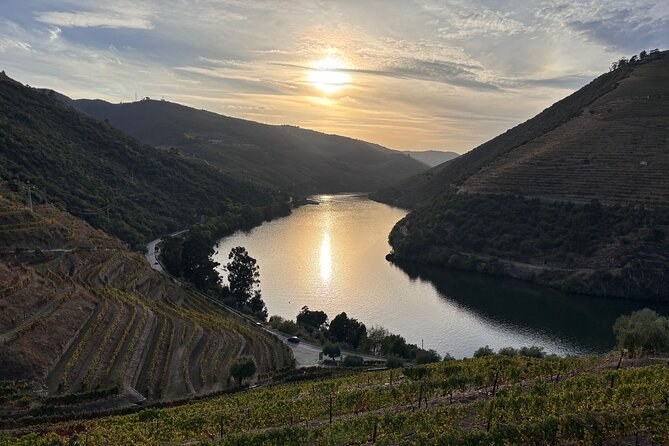
The one that will collect you inside the valley — train out, tour back.
From $306 per person